Caspian Crypto Exchange
A full crypto exchange on the web — spot and leverage, copy trading, wallets and custody, built for people who are not already traders.
- Type
- Trading platform
- Disciplines
- Product design, design systems, development
- Surfaces
- Marketing site, exchange, dashboard
- Markets
- Spot, leverage, copy trading
An exchange is several products wearing one name. Somebody arrives to buy their first bitcoin; somebody else has a leveraged position open and wants the chart, the order book and the ladder on one screen. Serve only the first and the platform is a toy. Serve only the second and everyone else leaves within a minute of signing up.

Depth, one step away.
So the depth is layered rather than averaged. The market list opens on a plain row — the asset, what it costs, which way it moved — and the full trading view is one step away, not the front door. Nothing is hidden from the trader who wants it, and nothing is imposed on the person who does not know they want it yet.
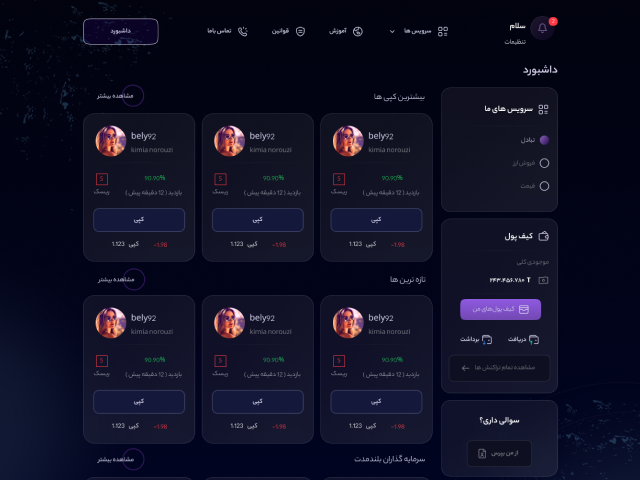
Copy trading is the clearest case of that. Following someone else is the most approachable thing a new user can do and the easiest to present dishonestly, so a leader card leads with the numbers that temper the promise: the risk score, the drawdown, how long the record actually runs. Return is the largest figure on the card, and it is not the only one.
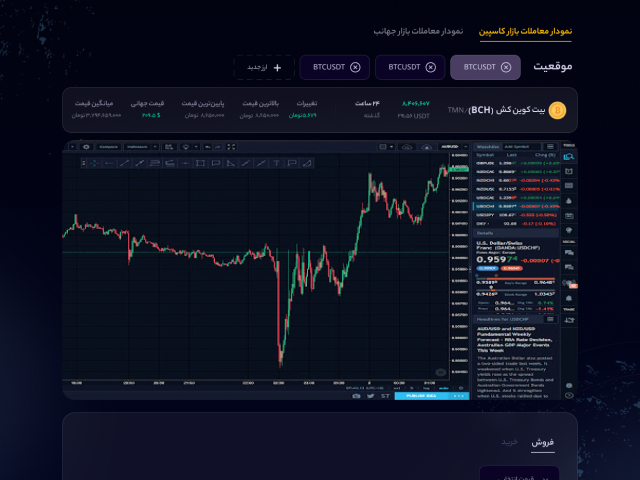
Leverage gets the same treatment from the other direction. Position size, liquidation price and margin are on the order form itself rather than behind a confirmation, because a number that only appears after you commit is not a warning — it is a receipt.
Money moving is where an exchange earns or loses trust in a single screen, so deposits, withdrawals and the wallet are one flow with one state model rather than three that happen to sit near each other. Every step says what is confirmed, what is pending, and what it is waiting on.
The whole thing is Persian-first and right-to-left, which is a structural constraint rather than a translation job: numerals stay Latin and left-to-right inside a mirrored layout, charts and ladders read in the direction the market data does, and the type had to hold up at the small sizes a dense trading table lives in.