Robin Pizza
A pizza platform end to end — an app you build the order in, an admin panel that runs it, and the landing page that sends people to both.
- Type
- Ordering platform
- Disciplines
- Product design, design systems, development
- Platforms
- Web, iOS, Android
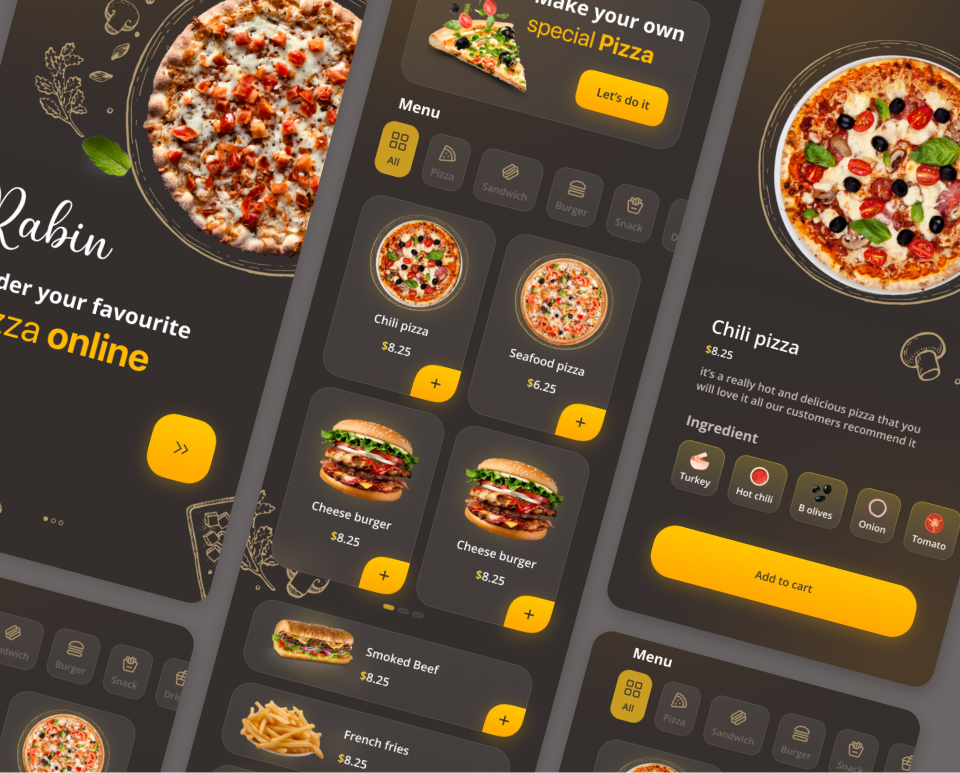
Ordering food is a solved problem right up to the moment somebody wants to change something. Most menus are a list you pick from; Robin is a list you build from. The app opens on the menu, but the thing it is actually built around is the step where you take a pizza apart and put it back together — ingredient by ingredient, priced as you go.
A list you build from.
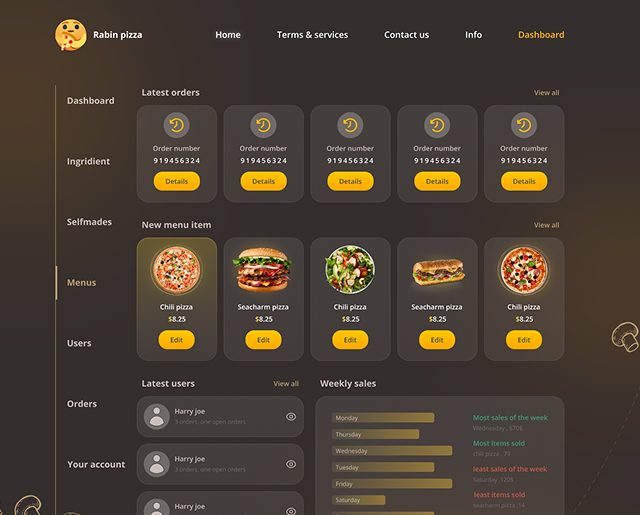
That only works if the kitchen can keep up with it, so the admin panel is not an afterthought bolted on at the end. Ingredients, menu items, orders and users are one model, and the panel is where it is managed: what is in stock, what is selling, which items are worth keeping and which week was the good one.
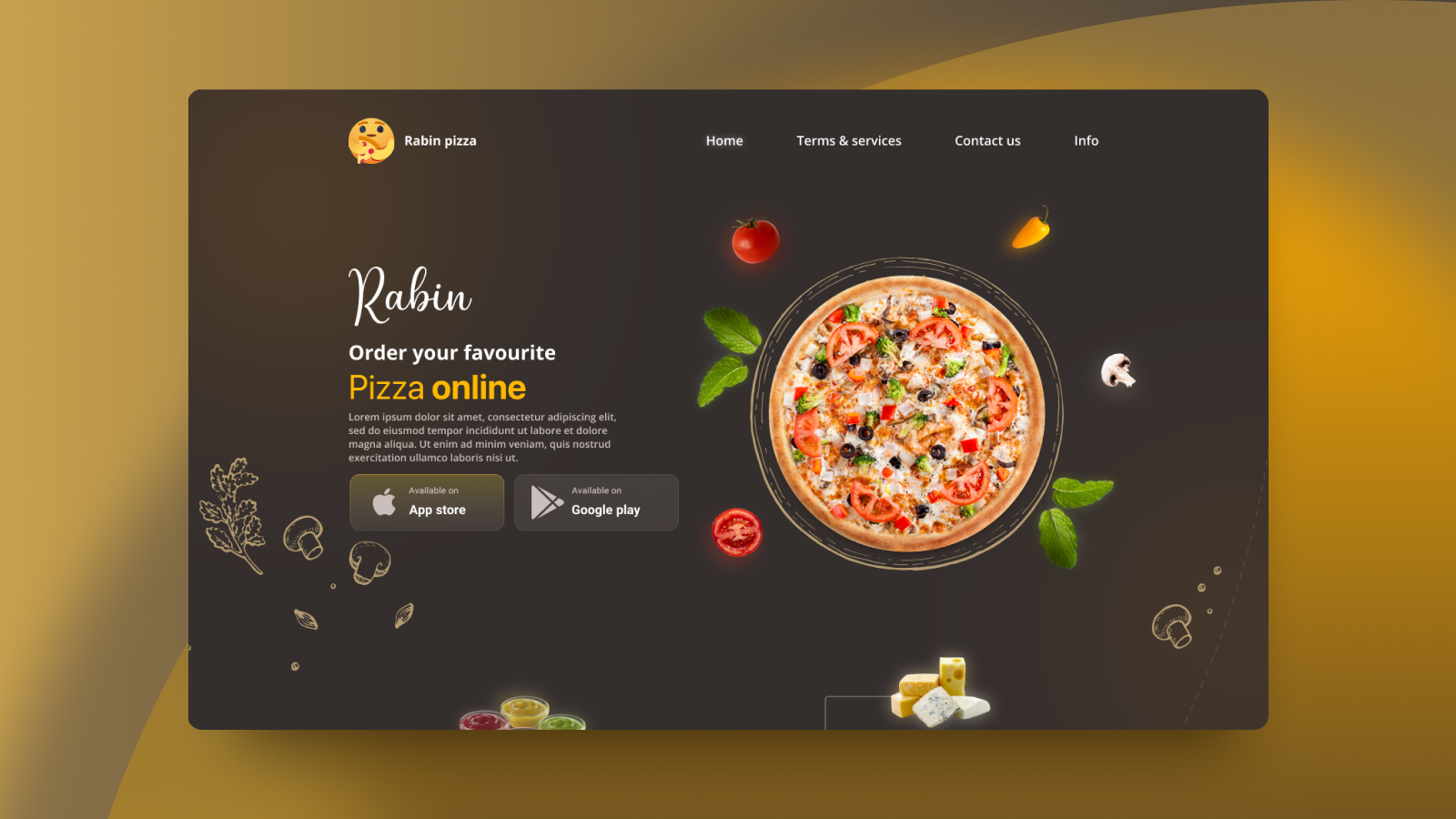
The landing page has one job — get the app installed — and the two store badges sit directly under the headline for that reason. Same dark ground, same warm yellow, same photography treatment as the app it is sending people to, so arriving on the store page does not feel like being handed off to somebody else.
The challenge
Customisation is where ordering apps usually break down. A fixed menu is easy to price and easy to cook; a pizza assembled ingredient by ingredient is neither, unless the product is designed for it from the start. The customer needs to see the price move with every choice, and the kitchen needs to receive exactly what was built.
Around that sat two further problems. The business needed to run the whole operation — menu, ingredients, orders, customers — from one place rather than from several disconnected tools. And people had to reach the app in the first place, which meant a landing page whose only measure of success is an install.
How Lico Studio approached it
Product and interface design
The app is structured as a short path: the menu, an item with its ingredients laid out, and the custom pizza builder. The builder was designed as the centre of the experience rather than an option tucked behind a button — each ingredient is a visible, reversible choice, and the running price is always in view, so nobody reaches checkout surprised.
The admin dashboard was designed for someone glancing at it between orders: latest orders, menu items, users and weekly sales on a single screen. The landing page shares the app's dark ground, warm yellow and photography, with one design system tying the three surfaces together.
Engineering and implementation
Ingredients, menu items, orders and users live in one model, and both the app and the admin panel read from and write to it. A pizza is stored as the set of ingredients it was built from, so its price is calculated from those ingredients and the order that reaches the kitchen describes the pizza exactly as the customer made it.
The customer app was built for iOS and Android, and the landing page and admin panel for the web. Because menu changes made in the panel flow straight into the app, there is a single source of truth for what can be ordered and what it costs.
What was delivered
A complete ordering platform: a customer app for iOS and Android with a menu and an ingredient-level pizza builder, a web admin panel, and a landing page that leads straight to the App Store and Google Play. Customers can build and order exactly the pizza they want; the business can manage its menu and ingredients, follow incoming orders and read its weekly sales without leaving the panel.
If you need programming and product development for your business, get in touch with Lico Studio.