WitVet
A marketplace putting vets and pet shops in one place, built around a social network for the animals themselves.
- Type
- Marketplace & community
- Disciplines
- Product design, design systems, development
- Platforms
- Web, iOS, Android
Owning an animal means dealing with two separate problems that nobody had put in the same place. You need a vet — the right one, near you, open now — and you need the things the animal eats, wears and sleeps on. WitVet is both: a directory of clinics you can search by distance and rating, and a marketplace of pet shops with their stock listed item by item.
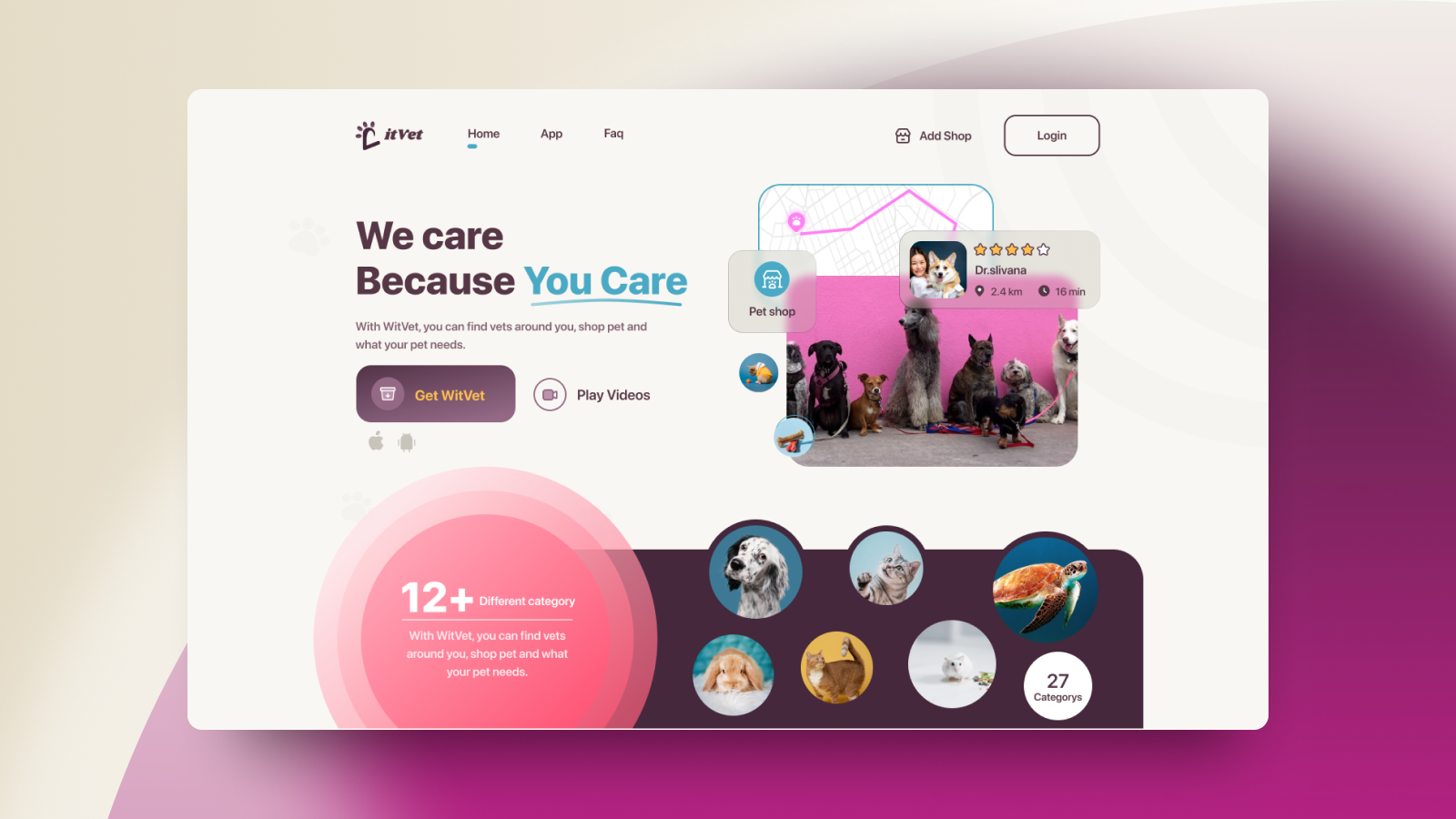
The pets are the accounts.
The part that makes it more than a listings site is that the animals have profiles. Pets are the accounts, not their owners, and the feed is built out of them — which is also what makes adoption work as a native part of the product rather than a form bolted onto the side. An animal looking for a home is a profile like any other.
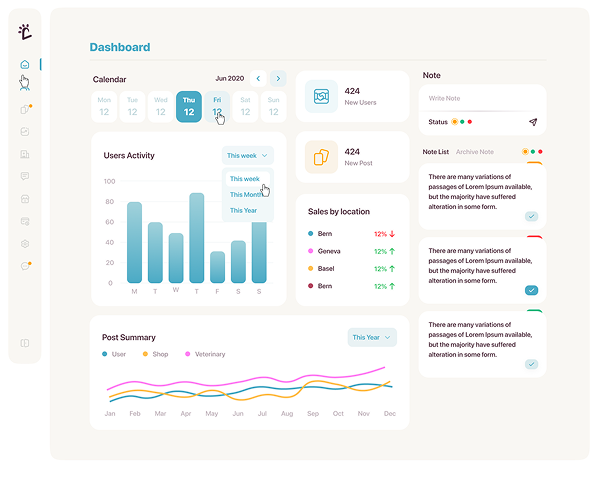
Three surfaces had to stay recognisably one product: a marketing site that explains the idea in a sentence, an operator dashboard for the shops and clinics running their side of it, and the app itself, which is where almost all of the actual use happens. One design system underneath all three, sized differently in each.
The challenge
WitVet had three audiences who want different things from the same product. Pet owners come to find a clinic or buy supplies; clinics and shops come to be found and to sell; and the social side only works if owners keep coming back when they do not need anything. Built naively, that is three apps sharing a logo.
The harder question was structural. If the animal is the account, the whole product has to be organised around that decision: one owner may look after several pets, a pet may be up for adoption, and a clinic or a shop has to sit comfortably in the same world without turning the feed into a noticeboard of adverts.
How Lico Studio approached it
Product and interface design
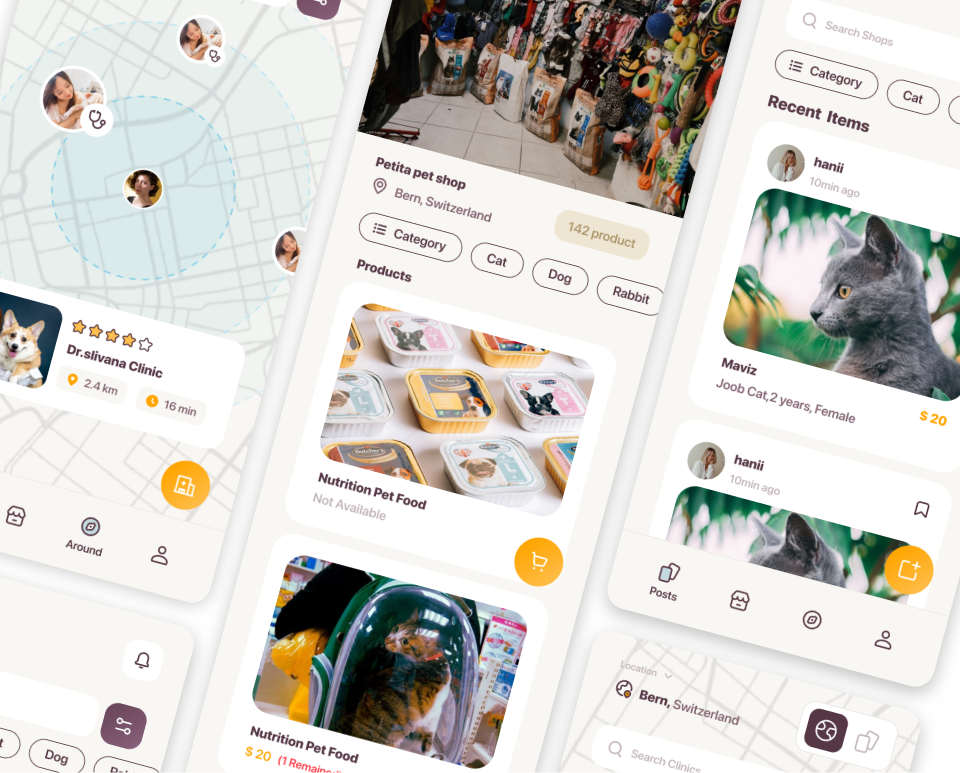
We started from the app, because that is where people spend their time, and worked outwards. Its navigation is built on the three things an owner actually does: find a clinic nearby, browse a shop and its products, and follow the animals in the feed. Each clinic and shop page answers the practical questions first — where, how well rated, what is in stock — before anything else.
The design system was written once and then sized for each surface: generous and explanatory on the marketing site, dense and tabular in the operator dashboard, touch-first in the app. Components, type and colour stay the same, so moving between them feels like the same product at a different distance.
Engineering and implementation
Underneath, there is one data model — pets, owners, clinics, shops, products and posts — served to the web and to native iOS and Android apps. Clinic search is location-aware, so results can be ordered by distance and filtered by rating, and each shop's catalogue is held item by item rather than as a flat listing.
Because the feed is built from pet profiles, adoption needed no separate system: it is a state a profile can be in. The operator dashboard reads from the same model, which is how activity, sales by location and posts can be shown side by side without a reporting layer stitched on afterwards.
What was delivered
A marketing site, an operator dashboard for clinics and shops, and a mobile app for iOS and Android, all on one design system. Owners can find a vet near them, buy from local pet shops, give each animal its own profile and put one up for adoption. Operators can see user activity, sales by location and what is being posted, in one place.
If you need programming and product development for your business, get in touch with Lico Studio.